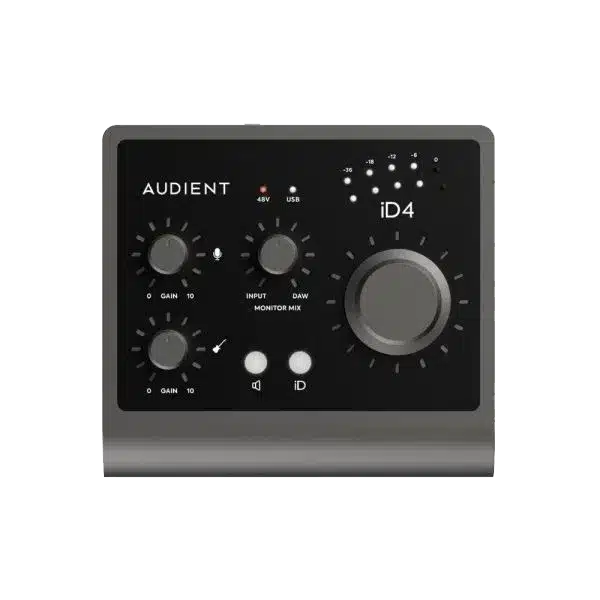
Audient
Audient iD4 MKII 2-In/2-Out USB-C Audio Interface
Audient iD4 MKII is a 2-in/2-out USB-C audio interface with an Audient Console Mic Preamp, a separate JFET instrument input and dual headphone sockets. Record at up to 24-bit/96kHz, blend direct monitoring with playback, and capture computer audio with loopback.
Overview
AUDIENT ID4 MKII 2-IN/2-OUT USB-C AUDIO INTERFACE
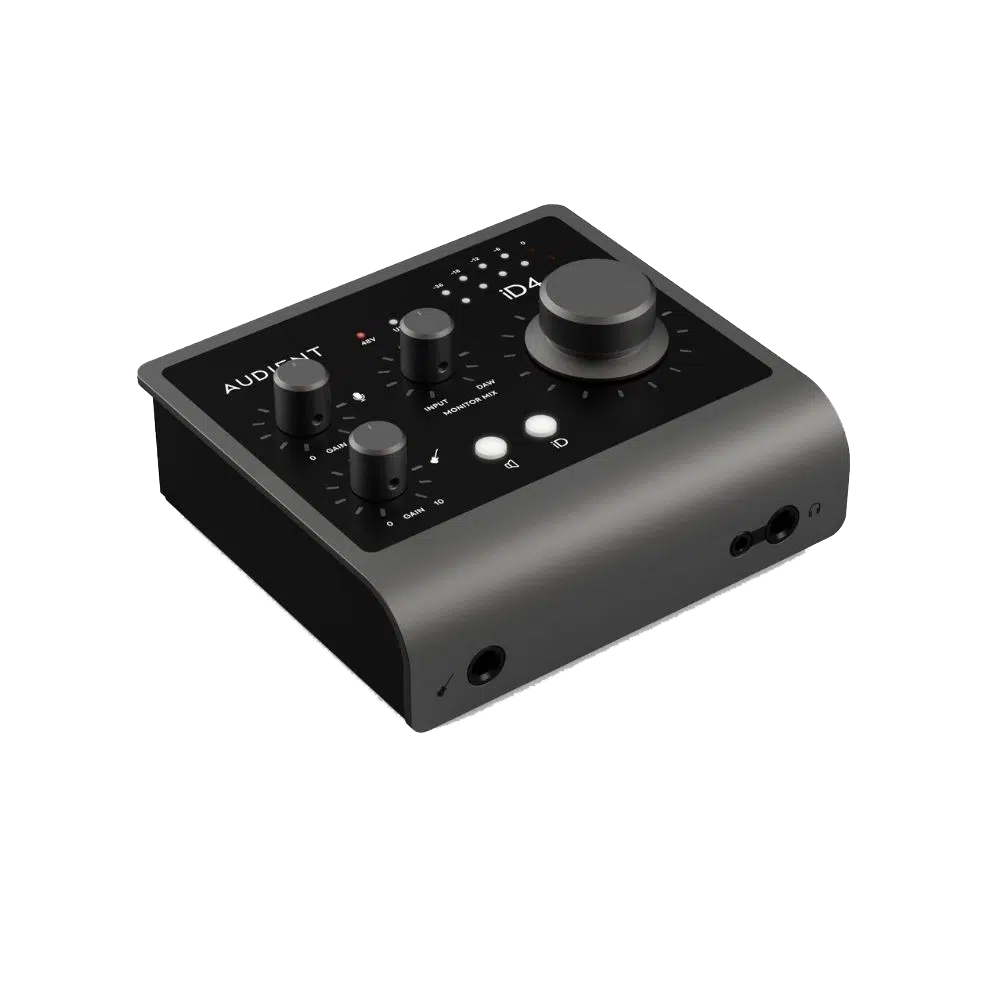
Record voice and guitar from one compact interface
Audient iD4 MKII is a 2-in/2-out USB-C audio interface with an Audient Console Mic Preamp, a separate JFET instrument input and dual headphone sockets. Record at up to 24-bit/96kHz, blend direct monitoring with playback, and capture computer audio with loopback.
2
Analogue Recording Channels
1
Microphone Preamps
Up to 24-bit / 96 kHz
Maximum Recording Format
USB-C
Interface USB Connector
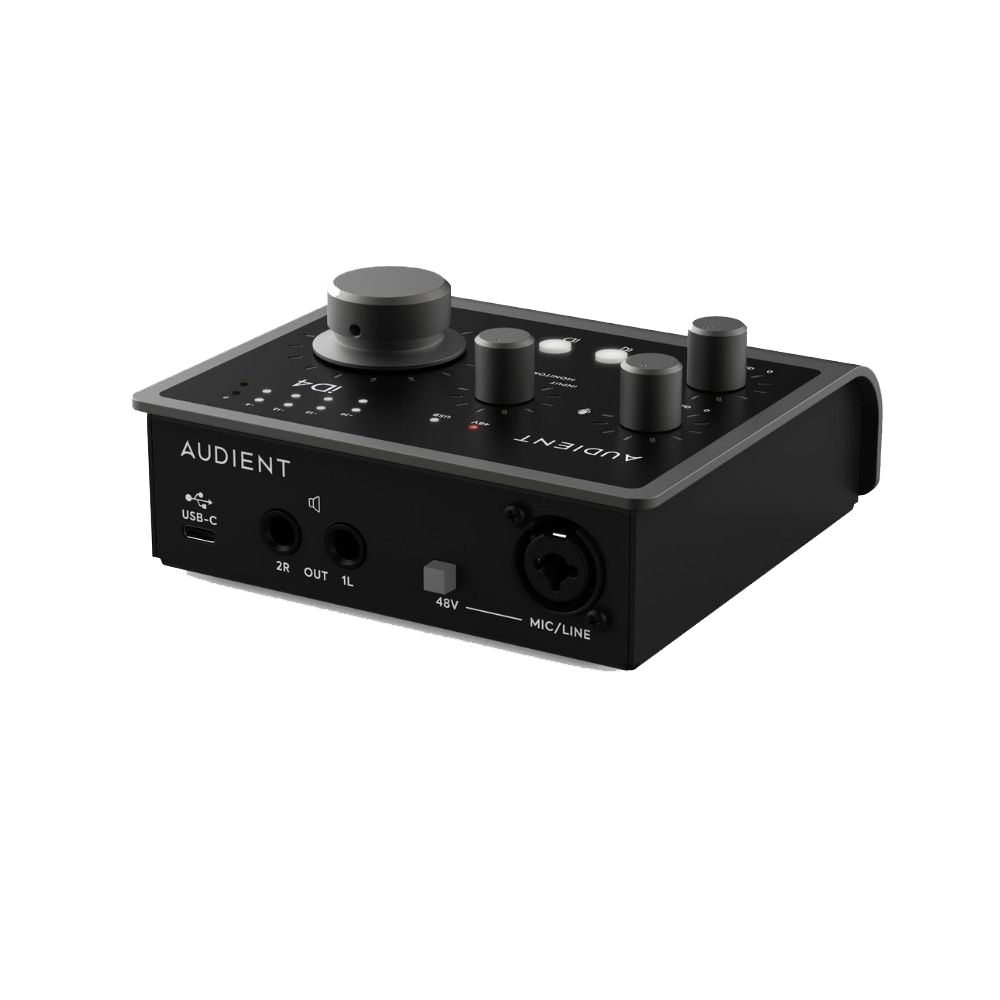
A microphone and instrument together
The rear combo socket accepts an XLR microphone or balanced line source, while the front JFET input records a guitar or bass on its own channel. The microphone preamp offers 58 dB of gain and switchable 48V phantom power for compatible condenser microphones.
Monitor the take without losing focus
The Monitor Mix control blends your direct input signals with computer playback. Use Monitor Pan to choose how those inputs sit in the stereo image, and mute the speakers when recording close to an open microphone. These controls keep everyday recording adjustments within reach.
Two headphone sockets, one listening signal
Connect 6.35 mm or 3.5 mm headphones without needing a plug adaptor. Both sockets carry the same stereo signal rather than separate mixes. The headphone amplifier can drive a broad range of headphones, with available output power depending on the connected USB power supply.
Control software and capture playback
ScrollControl turns the volume encoder into a control for compatible software parameters under your cursor. Audio Loop-back lets recording or streaming software capture computer playback alongside your microphone, making the interface useful for lessons, calls and content creation.
A compact metal interface for your desk
The iD4 MKII records at up to 24-bit/96 kHz and is powered over USB. Use a USB 3.0 or higher port delivering at least 0.9 A at 5 V; a 1.5 A USB-C supply supports higher headphone output levels. The supplied USB-C cable connects the interface to a suitable computer port.
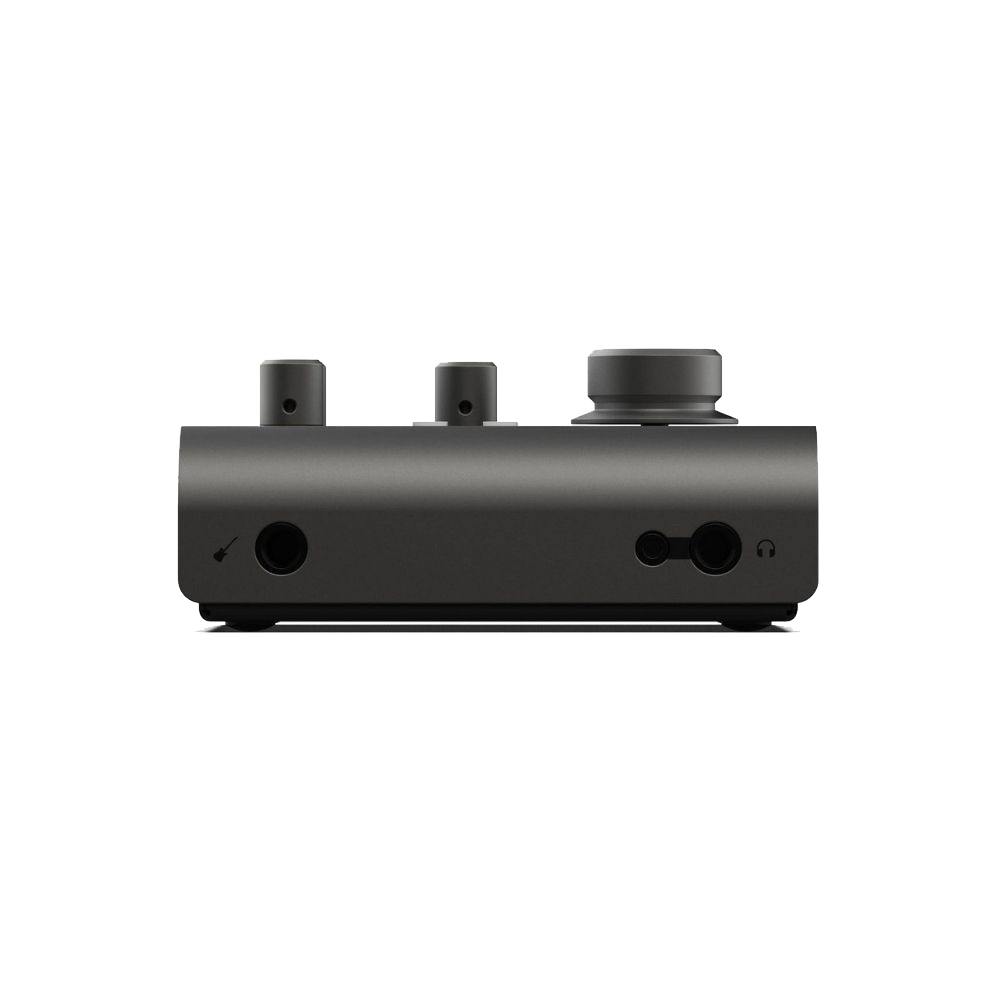
Plan the Session Around the Actual Inputs
One microphone/line combo input and an independent JFET instrument input provide two recording channels. Two headphone sockets share the same stereo signal. Assign the live sources before recording and choose the appropriate microphone, instrument or line setting for the connection you use.
Complete Your Workspace
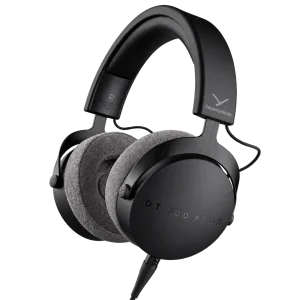
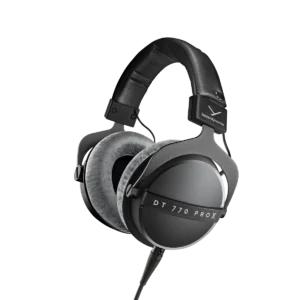
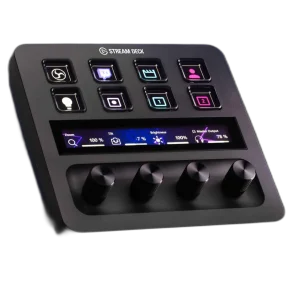
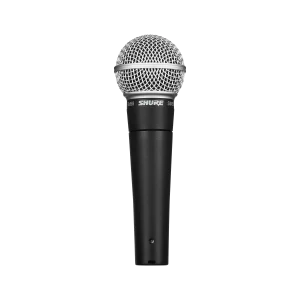
Explore Audio-Technica AT2020 XLR microphone, ATH-M40x closed-back headphones, Compare audio interfaces and mixers, Browse microphones, Explore studio headphones for your setup. Suggested products are sold separately. Check the number of analogue recording channels, microphone preamps, digital expansion, MIDI, mobile support and supplied accessories when comparing interfaces. An Audio-Technica AT2020 XLR microphone requires 48 V phantom power; a Shure SM58 is a separate dynamic microphone choice. Use the correct XLR cable and microphone input. Beyerdynamic and Audio-Technica headphones provide listening alternatives, and Elgato controls complement a supported computer workflow. iD14 MKII desktop and ADAT functions do not include iD4 MKII’s supported iOS use. Mobile setups may require an adapter and external power. Choose the actual cables and recording software for the selected host.
Frequently Asked Questions
How many physical recording channels does it provide?
One microphone/line combo input and an independent JFET instrument input provide two recording channels. Two headphone sockets share the same stereo signal.
Which USB format and power should I plan for?
USB-C is the physical connector; this model’s host power requirement is USB bus power; minimum 0.9 A at 5 V from USB 3.0 or higher.
Which microphone connection should I use?
Connect an analogue XLR microphone to the supported microphone input. Use switchable 48 V phantom power only for a microphone or active accessory that requires it. USB microphones connect to their supported host separately.
Which recording format is supported?
Up to 24-bit / 96 kHz. Select a compatible sample rate and bit depth in the application; the stated maximum does not replace input-gain setup or guarantee an unclippable recording.
Are the two headphone sockets separate mixes?
The 3.5 mm and 6.35 mm sockets carry the same stereo headphone signal. Available output power also depends on the supported USB power supply.
Can I use a supported iPad or iPhone?
Supported mobile operation needs the correct USB connection and adequate power. An appropriate adapter or powered hub may be required; desktop control software and bundled applications have separate system requirements.
Build Your Setup with AX Store Kuwait
Explore computers, displays and accessories for your workspace at AX Store Kuwait. For help choosing the right model or checking an accessory, contact AX Store.
THE DETAILS
Technical specifications
Interface and connections
Audient iD4 MKII
2 inputs / 2 outputs
1 × XLR / TRS combo
1 × Audient Console Mic Preamp
JFET D.I.; independent input 2
2 × 6.35 mm TRS
6.35 mm and 3.5 mm; shared stereo signal
Up to 24-bit / 96 kHz
44.1 / 48 / 88.2 / 96 kHz
None
USB-C
USB bus power; minimum 0.9 A at 5 V from USB 3.0 or higher
1.5 A at 5 V USB-C supply
Yes
Yes
All metal
Microphone and line preamplifier
58 dB
+12 dBu
+21 dBu
2.8 kΩ
>8 kΩ
48 V ±4 V at 10 mA per channel
0.00170%
<0.04%
10 Hz–40 kHz ±0.5 dB
JFET instrument input
40 dB
+12 dBu = 0 dBFS
0.1%
10 Hz–20 kHz ±0.5 dB
Conversion and monitor output
120 dB A-weighted
0.001%
10 Hz–40 kHz ±0.5 dB
125.5 dB A-weighted
+12 dBu = 0 dBFS
0.0006%
10 Hz–40 kHz ±0.1 dB
Headphone performance
125.5 dB A-weighted
+18 dBu = 0 dBFS
0.0009%
223 mW; 1.827 V RMS
280 mW; 2.95 V RMS
100 mW; 5.46 V RMS
COMPLETE YOUR SETUP