Behringer
Behringer UMC404HD Audio Interface, Studio Quality
Record microphones, guitars and line-level instruments through the Behringer U-PHORIA UMC404HD. Four Midas-designed preamps, 24-bit/192kHz conversion and MIDI connections give a home studio room to grow beyond a two-input setup.
Regular price
73.500 KWD
or 4 payments of 18.375 KWD with
Pay with card & save


70.000 KWD
Save 3.500 KWD
Overview
BEHRINGER UMC404HD AUDIO INTERFACE, STUDIO QUALITY
Behringer UMC404HD
Behringer UMC404HD: Record microphones, guitars and line-level instruments through the Behringer U-PHORIA UMC404HD. Four Midas-designed preamps, 24-bit/192kHz conversion and MIDI connections give a home studio room to grow beyond a two-input setup. Explore this model at AX Store in Kuwait.
4
Analogue Recording Channels
4
Microphone Preamps
Up to 24-bit / 192 kHz
Maximum Recording Format
USB
Interface USB Connector
Connect the whole performance
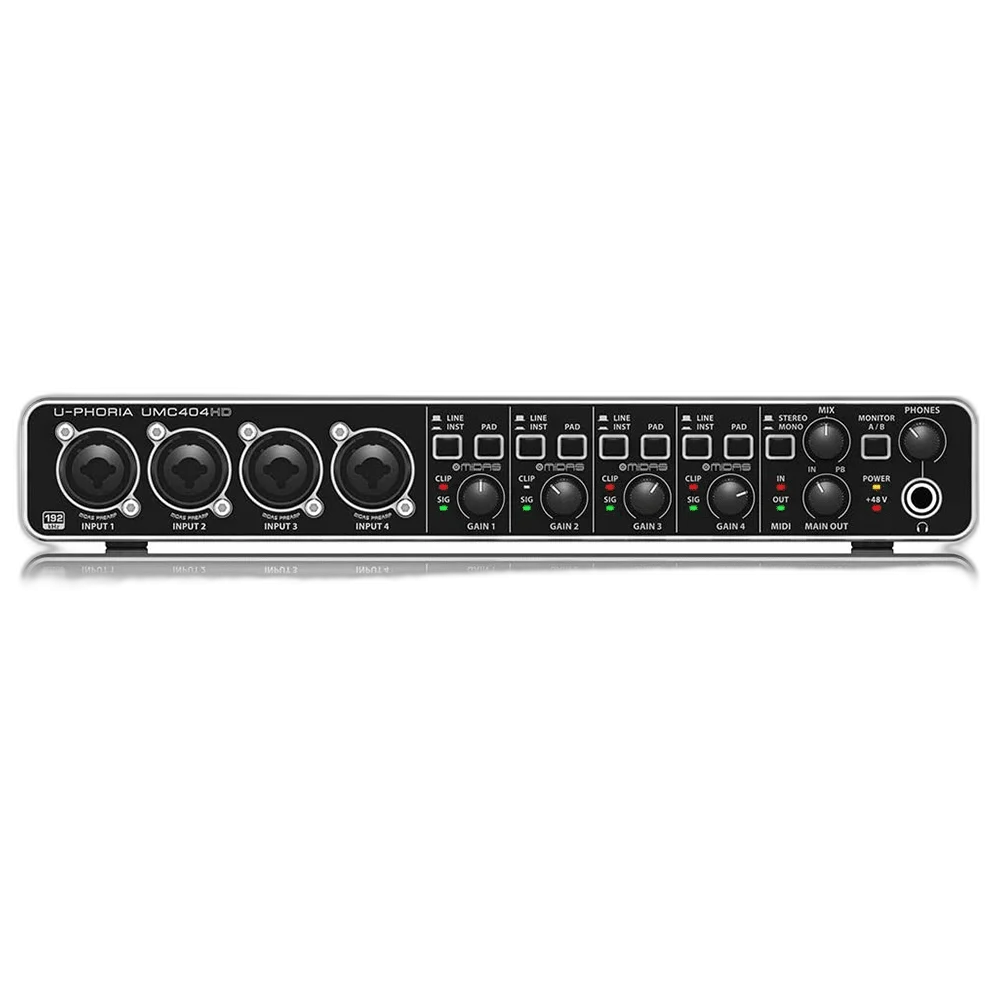
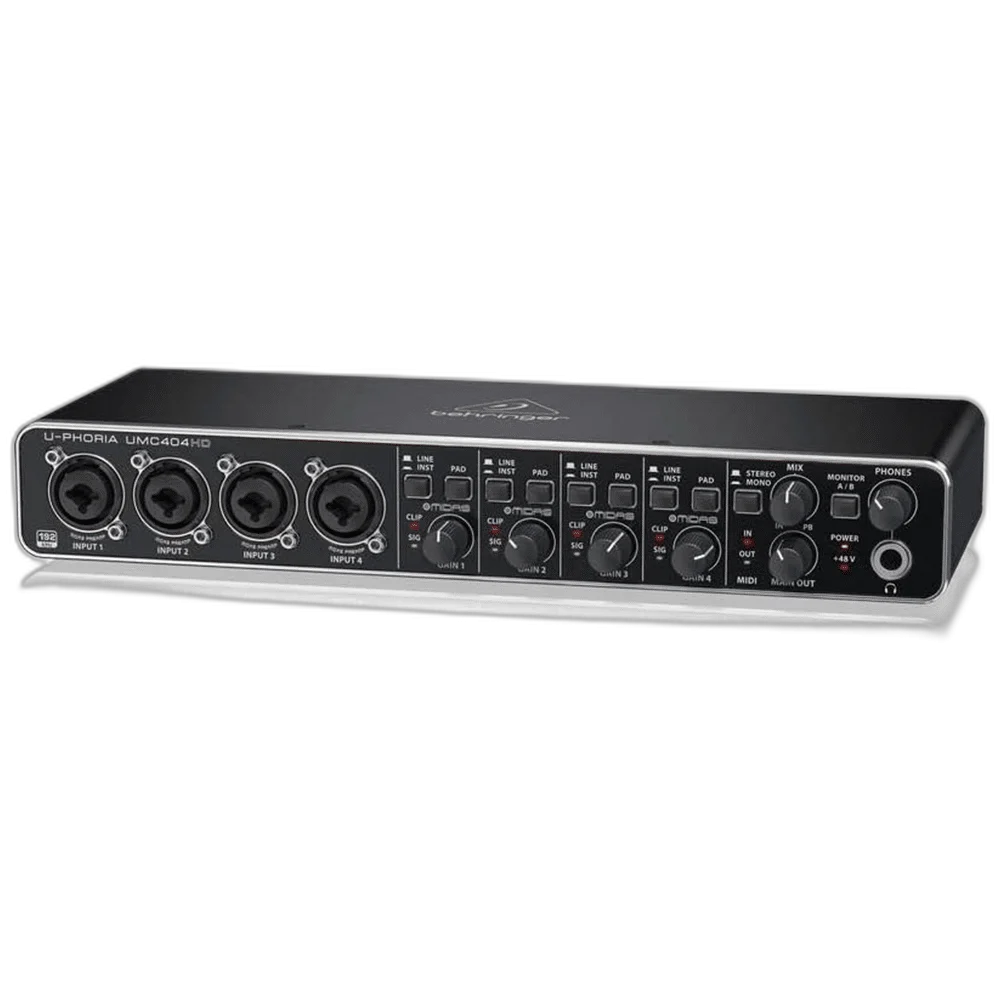
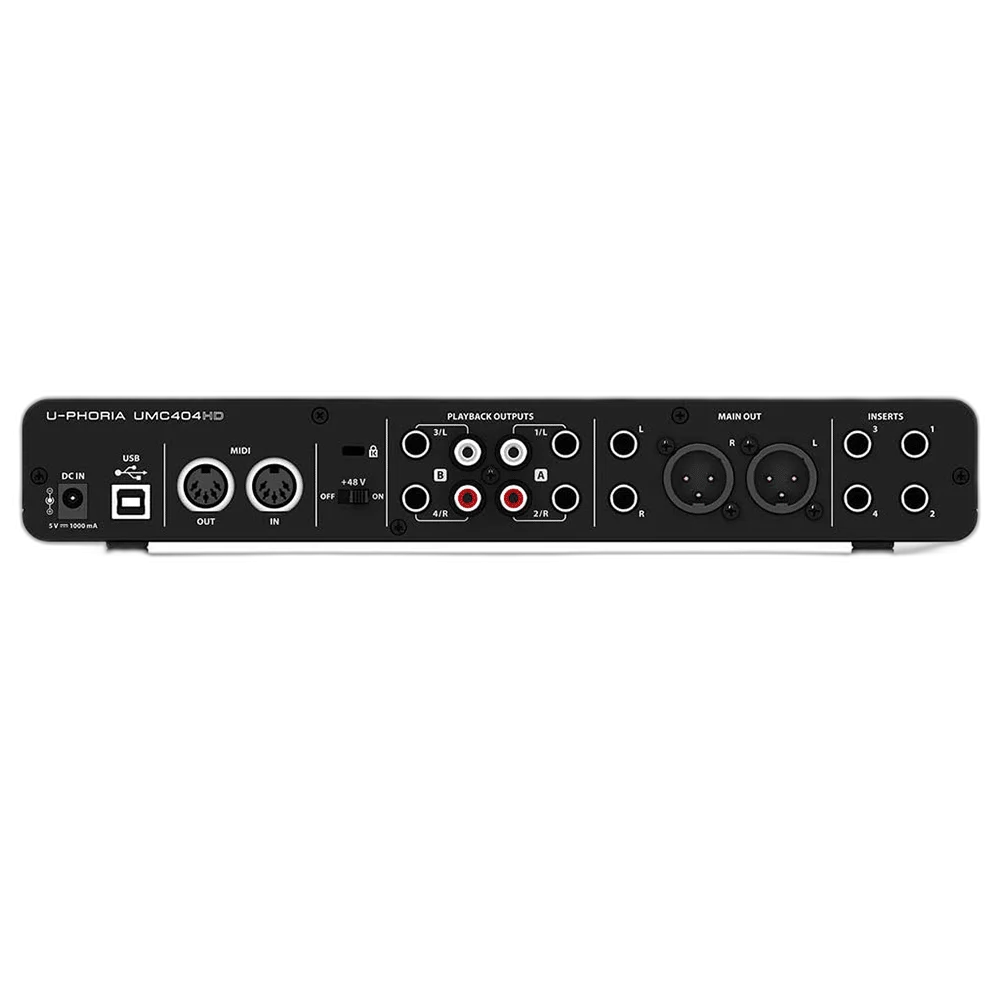
Four combination XLR/TRS inputs accept microphone, line and instrument signals. Individual gain controls and pad switches help manage different sources, while switchable 48V phantom power supports compatible condenser microphones.
Monitor while you record
The direct-monitor mix control blends incoming audio with computer playback. A separate headphone level and A/B monitoring selection make it easier to work with playback channels 1–2 or 3–4 while recording or preparing backing tracks.
Bring hardware into your workflow
Four analogue inserts let you patch external processors into the input paths. MIDI input and output connect compatible controllers and instruments, and the rear-panel playback connections provide options for routing audio to external equipment.
Plan the Session Around the Actual Inputs
Four XLR/TRS combo inputs provide four analogue channels with four Midas-designed microphone preamps. Select microphone, line or instrument connections for the actual sources and use the individual pads where appropriate. Assign the live sources before recording and choose the appropriate microphone, instrument or line setting for the connection you use.
Supply the Host Power the Interface Needs
The power arrangement is USB bus power and external adapter. Use the specified cable and adequate host or external power. Check a mobile setup separately, as a matching USB connector does not guarantee the connected device supplies the required current.
Connect a Microphone for the Analogue Signal Path
Use a suitable XLR microphone and cable for the interface’s analogue microphone input. Check whether the microphone requires 48 V phantom power, set the gain for the actual performance and keep USB microphone connections on their supported host route.
Choose Inputs and Monitoring Around the Session
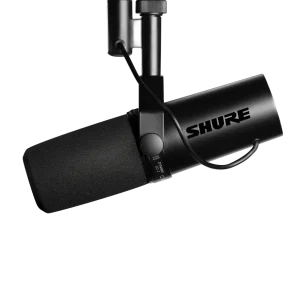
Count the microphone and instrument inputs you need, then plan headphone monitoring, computer connections and any recording destination. Choose one deliberate audio route so playback and commentary reach the intended outputs. Compare related options such as RØDE AI-1 USB-C Audio Interface or Focusrite Scarlett 2i2 4th Gen USB Audio Interface, 120dB Dynamic Range, keeping the exact model and configuration in the decision. For the wider setup, explore Shure SM7dB Dynamic Vocal Microphone with Built-in Preamp and check the connection, size or mounting requirements before pairing accessories. Browse the Behringer range at AX for more choices.
Behringer UMC404HD Setup Choices
Count the microphone and instrument inputs you need, then plan headphone monitoring, computer connections and any recording destination. Choose one deliberate audio route so playback and commentary reach the intended outputs. Explore Shure SM7B Dynamic Microphone, XLR, RØDE PodMic USB Dynamic Microphone – USB-C & XLR – Black / White, beyerdynamic DT 990 PRO 80 Ohm Open-Back Studio Headphones.
Frequently Asked Questions
How many physical recording channels does it provide?
Four XLR/TRS combo inputs provide four analogue channels with four Midas-designed microphone preamps. Select microphone, line or instrument connections for the actual sources and use the individual pads where appropriate.
Which USB format and power should I plan for?
USB is the stated connection family. USB bus power and external adapter. Check the required cable, host power and current driver support.
Which microphone connection should I use?
Connect an analogue XLR microphone to the supported microphone input. Use switchable 48 V phantom power only for a microphone or active accessory that requires it. USB microphones connect to their supported host separately.
Which recording format is supported?
Up to 24-bit / 192 kHz. Select a compatible sample rate and bit depth in the application; the stated maximum does not replace input-gain setup or guarantee an unclippable recording.
Build Your Setup with AX Store
Explore computers, displays and accessories for your workspace at AX Store. For help choosing the right model or checking an accessory, contact AX Store.
THE DETAILS
Technical specifications
Audio and inputs
U-PHORIA UMC404HD
4 inputs / 4 outputs
24-bit
44.1 / 48 / 88.2 / 96 / 176.4 / 192 kHz
4 Midas-designed microphone preamps
4 XLR/TRS combo sockets: microphone / line / instrument
4 individual pad switches
Switchable +48 V
10 Hz–50 kHz (0 / −3 dB)
3 kΩ
1 MΩ
−4 dBu
+20 dBu
−3 dBu
Outputs and routing
2 × 6.35 mm TRS; 2 × XLR
4 × 6.35 mm TRS; 4 × RCA
1 × 6.35 mm stereo
10 Hz–43 kHz (0 / +0.3 dB)
+3 dBu
100 dB, A-weighted
4 × 6.35 mm TRS
Send 100 Ω; return 10 kΩ
+3 dBu
5-pin DIN input and output
Input/playback mix balance
A/B: outputs 1–2 or 3–4
Connection and size
USB 2.0 Type-B
Mac and Windows; check current driver compatibility
USB bus power and external adapter
2.5 W
100–240 V AC, 50/60 Hz
45.81 × 292 × 130 mm
1.2 kg
Kensington lock slot
COMPLETE YOUR SETUP
Pairs well with

Beyerdynamic
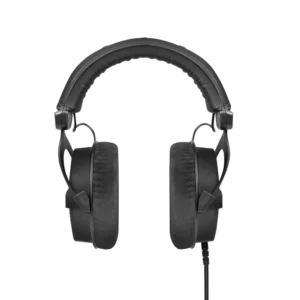
beyerdynamic DT 990 PRO Black Edition – 80 Ohm
AUDIO-TECHNICA
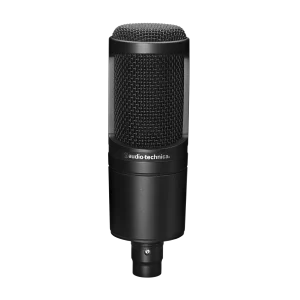
Audio-Technica AT2020 XLR Cardioid Condenser Microphone