
COMPARISON
Audio
4.4mm vs 6.35mm: Headphone Cables and Balanced Outputs
4.4mm vs 6.35mm is a connection and wiring question: match the headphone cable to the output and never assume that a plug adapter changes the electrical.
AS
AX Store
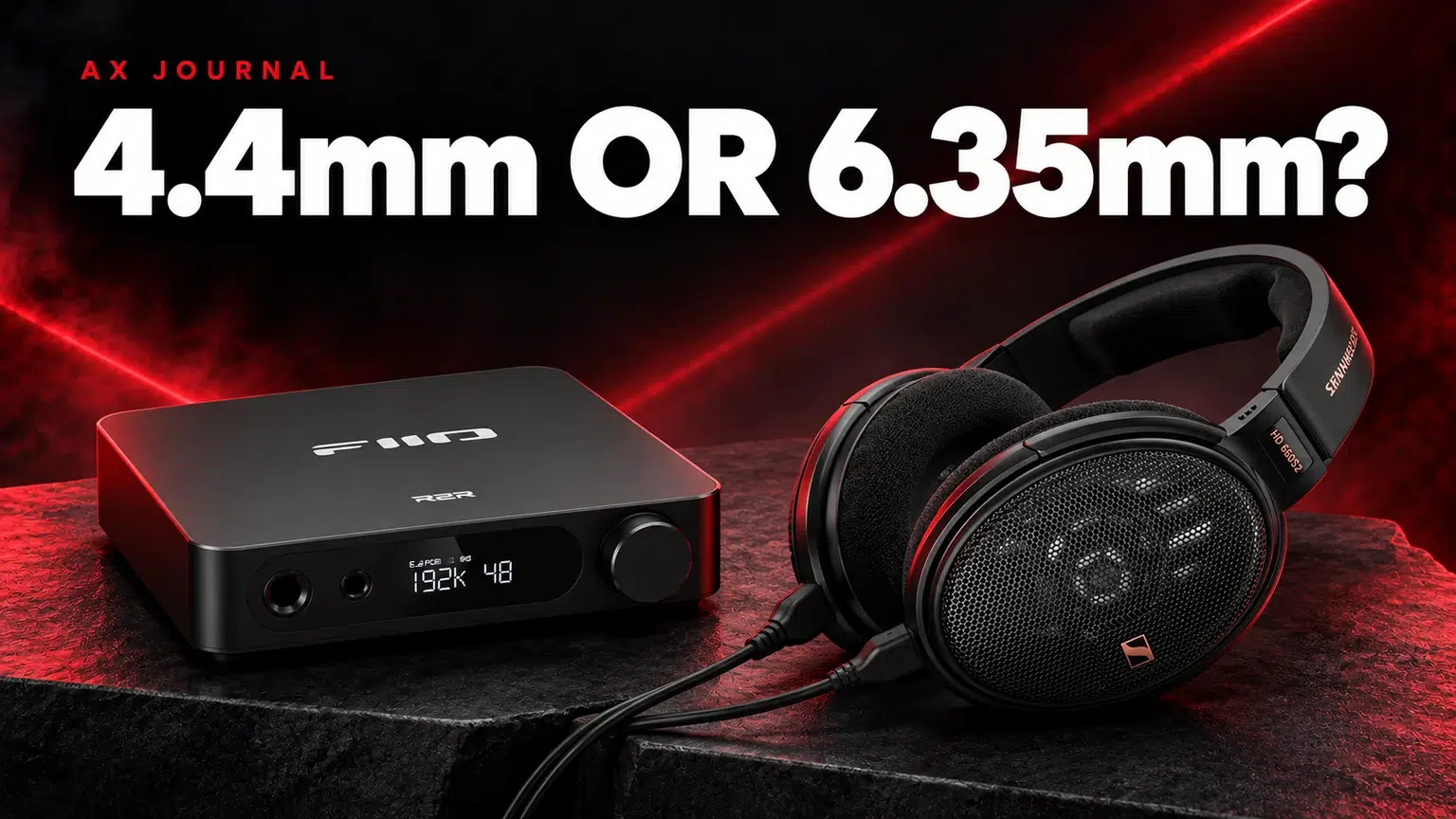
4.4mm vs 6.35mm: the essentials
4.4mm vs 6.35mm is a connection and wiring question: match the headphone cable to the output and never assume that a plug adapter changes the electrical design.
Connector size and amplifier design are separate questions
A conventional 6.35mm stereo headphone plug normally carries left, right and a shared return. A 4.4mm headphone cable can provide separate connections for the two drivers, allowing a suitable amplifier to drive them differentially.
However, manufacturers can also wire a 4.4mm socket for single-ended operation. JDS Labs Atom Amp 2 is an important example: its manufacturer describes both headphone sockets as single-ended. The shape of the connector alone does not identify the amplifier topology.
Use model-specific output information
| Connection example | What to establish | Buying implication |
|---|---|---|
| 6.35mm stereo output | Correct headphone plug and any required 3.5mm adapter | Often works with the supplied headphone cable |
| 4.4mm differential output | Correct separate-driver cable and manufacturer pinout | Do not use a shared-ground conversion adapter |
| Atom Amp 2 4.4mm socket | JDS specifies single-ended operation | Choose a suitable cable for convenience, not an assumed power increase |
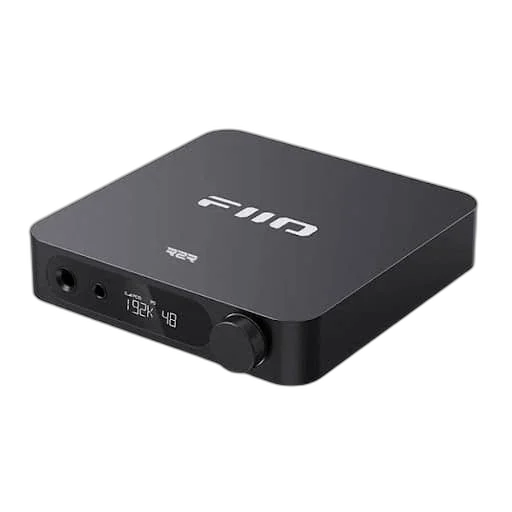
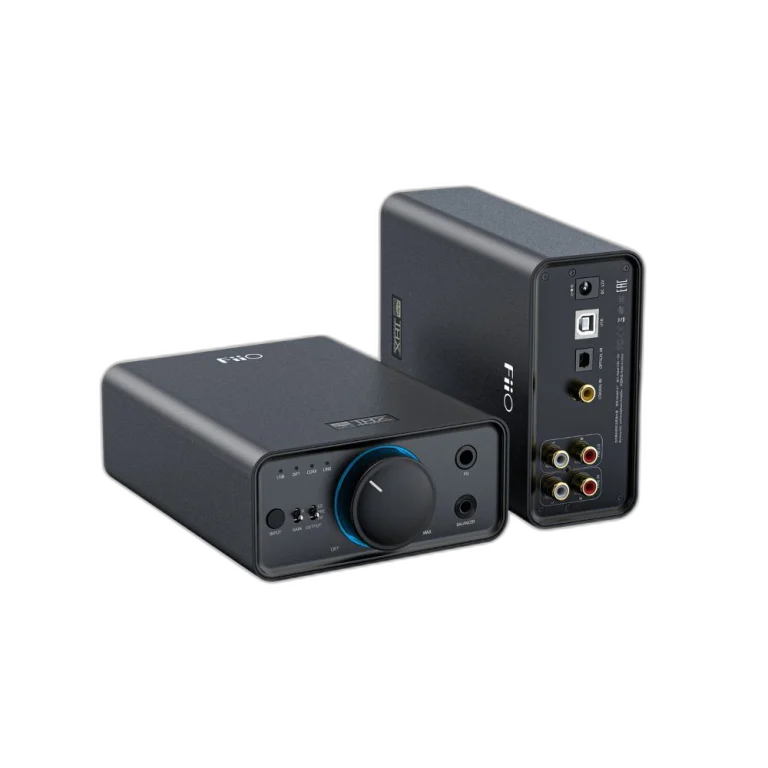
| FiiO DAC/amp with multiple sockets | Exact model, output mode and published load figures | Compare each output on that model, not on connector size alone |
FiiO K7 and K11 R2R are separate products with their own specifications. Do not copy an output claim from one model onto another simply because the front panels have similar sockets.
Why the wrong adapter is a problem
On a differential headphone output, the negative terminals can be active outputs rather than a common ground. A simple adapter that combines them can short those outputs together. FiiO specifically warns against converting an unbalanced headphone plug into its K7 balanced output this way.
An adapter changes connector shape; it cannot create independent left and right return conductors throughout a shared-ground headphone cable. If the headphone supports an appropriate replacement cable, use a correctly specified one. If it does not, use the amplifier output intended for that cable.
The HD 660S2 is a useful practical example
The Sennheiser HD 660S2 specification lists both a 6.35mm unbalanced cable and a 4.4mm balanced cable. This lets you choose the cable appropriate to a compatible amplifier rather than adding a questionable conversion adapter.
Verify the accessories in your exact regional package before ordering. Replacement cables must also fit the headphone-side connectors and wiring. Two plugs that look similar are not a guarantee of compatibility.
Will balanced necessarily sound better?
Balanced is not a universal quality ranking. It describes an electrical arrangement. Depending on the amplifier, a differential output may have different voltage capability, gain, noise or distortion from its single-ended output. The circuit and the headphone load decide the practical result.
When comparing outputs, match listening level. A louder output can appear more impressive even when the main difference is volume. If a single-ended connection already provides the required clean headroom, changing cable type is not automatically the most useful upgrade.
A connection checklist before you buy
- Identify the exact amplifier model and its supported output wiring.
- Identify the exact headphone model and supported cable arrangement.
- Check the supplied cable inventory before purchasing extras.
- Use a manufacturer-approved cable or adapter arrangement.
- Turn the volume down before connecting and start on the lowest suitable gain.
Keep microphone XLR cables separate in your thinking: a three-pin balanced microphone connection and a headphone connector with separate driver returns do different jobs. Similar terminology does not make their accessories interchangeable.
For the related buying decision, read our Open-back vs closed-back headphones.
Frequently asked questions
Can I use a 3.5mm-to-6.35mm adapter?
A correctly wired stereo adapter is commonly used with a conventional single-ended headphone output. Check the output and cable documentation rather than assuming every adapter is suitable.
Is every 4.4mm headphone output balanced?
No. JDS Labs explicitly identifies the Atom Amp 2 4.4mm output as single-ended.
Can an adapter make my standard cable balanced?
A connector adapter cannot add separate driver-return wiring through a shared-ground cable. Do not use one to force an unbalanced headphone plug into a differential output.
Continue planning your setup
- DAC vs Headphone Amp vs Audio Interface: What Does Your Desk Need?
- Headphone Impedance and Sensitivity: How to Choose an Amplifier
- Audio-Technica ATH-R70xa vs Sennheiser HD 660S2: A Practical Buying Guide
Check current configurations, included accessories and availability on the linked AX product pages. Ask AX about your exact setup.
Shop the equipment in Kuwait
AX price check, 26 October 2026: FiiO K11 R2R Desktop DAC & Headphone Amplifier – 24-Bit R2R — KWD 64.900 (out of stock); FiiO K7 Desktop DAC and Headphone Amplifier, Dual AK4493SEQ — KWD 79.900 (out of stock). The product cards show the current price and availability when you shop.
Explore FiiO at AX Kuwait, JDS LABS at AX Kuwait, Sennheiser at AX Kuwait for the rest of the range.
AS


Build a setup that fits how you use it
Tell AX your equipment models and what you want to do. We can help you choose the right connections and products.